In this guide, I’ll break down what 12x36x1 really means based on real-world experience working with various HVAC systems. You’ll learn how those dimensions affect airflow, efficiency, energy use, and even system lifespan. More importantly, I’ll show you how the right-sized filter can instantly improve air quality and help your HVAC system run the way it was designed to. If you want clear, practical guidance you can trust, you’ll find it here—rooted in hands-on expertise rather than generic advice.
Quick Answers
12x36x1 air filter
A 12x36x1 air filter is a specific HVAC filter size designed to fit a return vent or filter slot measuring roughly 12 inches by 36 inches with a 1-inch depth. Using the exact size ensures a tight seal, proper airflow, and effective filtration. In my experience, homeowners see the best results when they:
Measure the filter slot to confirm the size
Choose the highest MERV rating their system supports
Ensure the filter sits flush with no gaps
A correctly sized 12x36x1 filter improves indoor air quality fast and helps your HVAC system run more efficiently.
Top Takeaways
The right 12x36x1 size prevents air bypass and boosts filtration.
Always measure the filter slot—don’t rely on old labels.
Choose the highest MERV your system can handle.
Install with a tight seal and replace every 30–90 days.
A proper fit delivers fast improvements in dust, odors, and airflow.
What “12x36x1” Actually Refers To
A 12x36x1 air filter describes the nominal dimensions of the filter—its length (12 inches), width (36 inches), and thickness (1 inch). These measurements ensure the filter fits securely inside your HVAC system’s return vent or filter slot. Because manufacturers often round measurements, the actual size may be slightly smaller, which is why checking both the printed size and your system’s filter compartment is essential.
Why Filter Size Matters More Than You Think
Using the right size filter isn’t just about getting a snug fit—it’s about protecting your HVAC system and maintaining healthy indoor air. A correctly sized filter creates an airtight seal that forces all incoming air to pass through the filter media. When the filter is too small or too thin, air slips around the edges, carrying dust, pollen, and debris directly into your system and ductwork.
How a 12x36x1 Filter Impacts Airflow and Efficiency
A filter that’s too restrictive or the wrong size can reduce airflow, making your HVAC system work harder than it should. Over time, this can lead to higher energy bills, inconsistent temperatures, and unnecessary wear on your equipment. When the filter is properly sized—like a true 12x36x1—the system can maintain the right balance of airflow and filtration, helping it run more efficiently and last longer.
Who Typically Uses a 12x36x1 Filter?
This size is commonly found in larger return air grills or systems designed for higher airflow. Homeowners with open floor plans, expanded living spaces, or larger HVAC units may see this size listed on their existing filter. If your current filter matches this size, sticking with a 12x36x1 replacement ensures optimal performance.
The Bottom Line
A 12x36x1 air filter isn’t just a set of numbers—it’s a precise measurement that directly influences your home’s air quality, comfort, and HVAC health. Choosing the right size keeps your system efficient, your energy bills manageable, and your indoor air cleaner year-round.
“In every home I’ve serviced, one pattern holds true: replacing a 12x36x1 air filter on the right schedule does more for HVAC efficiency than almost any other maintenance step. When this filter is clean and properly sized, the entire system breathes easier—and so does your household.”
Essential Resources to Help You Choose the Right 12x36x1 Air Filter With Confidence
1. HVAC.com — Get Clarity on Standard Air Filter Sizes
Choosing the right size starts with understanding what’s standard—and what’s not. This guide breaks down common HVAC filter sizes so you can confirm whether a 12x36x1 filter is the best fit for your home’s system.
URL: https://www.hvac.com/expert-advice/common-air-filter-sizes-air-filters-size/
2. Filterbuy Size Chart — Know Your Exact Filter Dimensions Before You Buy
Not all filters labeled “12x36x1” measure the same. Our size chart makes it easy to compare nominal vs. actual size, helping you avoid poor-fitting filters and ensuring optimal performance across your home’s HVAC system.
URL: https://filterbuy.com/resources/air-filter-basics/air-filter-sizes/
3. FilterKnowHow — Measure Your Filter Slot the Right Way
A well-fitting filter starts with accurate measurements. This guide explains the difference between the size printed on the filter and the exact dimensions your home requires—helping you get a perfect fit every time.
URL: https://filterknowhow.com/choosing-the-correct-nominal-size-vs-the-actual-size-air-filter-sizing/
4. Legendary Service — Choose the Ideal MERV Rating for Your Home’s Needs
Whether you’re dealing with allergies, pets, or seasonal dust, this resource breaks down how MERV ratings impact airflow and filtration. It’s a great way to decide which 12x36x1 filter strength best supports your family’s air quality goals.
URL: https://legendaryservice.com/hvac/hvac-filter-how-to-choose-the-right-size-and-merv-rating/
5. Bob’s Repair — Double-Check Your Filter Slot Size for Accuracy
Before replacing your filter, it’s essential to confirm the measurements of your return vent or filter housing. This quick guide walks you through how to verify that a 12x36x1 filter is truly the right size for your home.
URL: https://bobsrepair.com/air-filter-sizes-guide/
6. Comfort First Products — Cross-Reference Compatible Furnace and AC Filter Sizes
If you’re unsure which filter your HVAC system was designed for, this reference makes it easy to check. It helps you avoid mismatched sizes and keeps your home’s airflow running smoothly and efficiently.
URL: https://comfortfirstproducts.com/furnace-and-air-conditioner-filter-sizes-guide/
7. eComfort — Match Filter Size, Material, and MERV Rating to Your Air Quality Goals
From dust control to odor reduction, this buying guide explains how size, thickness, and filtration media work together. Use it to choose the best 12x36x1 filter for comfort, efficiency, and clean air throughout your home.
URL: https://www.ecomfort.com/stories/1668-How-to-Pick-the-Perfect-Furnace-Filter.html
Supporting Statistics: Why The Right 12x36x1 Filter Size Matters
1. Indoor Air Pollution Is Often Worse Than Outdoors
Americans spend 90% of their time indoors.
Indoor air pollution can be 2–5× higher than outdoor levels.
Source: EPA – https://www.epa.gov/report-environment/indoor-air-quality
My insight: I often find heavy dust buildup in homes using the wrong filter size. A poor fit allows unfiltered air to bypass the filter entirely.
2. Millions Are Sensitive to Poor Indoor Air Quality
Over 26 million Americans have asthma.
More than 4 million children are affected.
Source: EPA – https://www.epa.gov/asthma
My insight: When working with families managing allergies or asthma, switching to a properly fitted 12x36x1 filter often reduces symptoms by minimizing exposure to irritants.
3. Health Agencies Recommend Higher MERV Ratings When Possible
CDC and EPA recommend MERV 13 or the highest rating your system supports.
Higher MERV captures more fine particles and respiratory hazards.
Source: CDC – https://www.cdc.gov/niosh/ventilation
My insight: Higher-rated filters only work effectively when they fit tightly. Even top-tier filters underperform if air escapes around the edges.
4. Half of the U.S. Lives With Unhealthy Pollution Levels
156 million Americans are exposed to unhealthy ozone or particle pollution.
Source: American Lung Association – https://www.lung.org/research/sota
My insight: During wildfire seasons or in high-pollution cities, homeowners often report smoke or dust indoors. A properly sized 12x36x1 filter is one of the simplest ways to reduce pollutants entering the home.
Final Thought & Opinion
Choosing the right 12x36x1 air filter may seem small, but in my experience, it makes a big difference in overall air quality and HVAC performance.
What I See Most Often
The biggest issues come from wrong-sized filters, not wrong MERV ratings.
Even a slight size mismatch allows dirty air to bypass the filter.
A properly sized 12x36x1 filter delivers immediate improvements in airflow and cleanliness.
Why Size Matters
Correct fit = better filtration
Better filtration = cleaner vents + fewer allergens
Cleaner airflow = lower strain on the HVAC system
What I Recommend
Confirm the exact size—measure the slot, not just the old filter.
Use the highest MERV rating your system can safely handle.
Replace consistently to keep performance strong.
My Final Take
A well-fitted 12x36x1 filter is one of the easiest, most affordable upgrades homeowners can make. When it fits properly, you’ll notice cleaner air, fewer odors, and smoother HVAC performance—often within days.
Next Steps
1. Measure Your Filter Slot
Remove the old filter.
Measure length, width, and depth.
Confirm your system truly needs 12x36x1.
2. Check MERV Compatibility
Look for your HVAC system’s recommended MERV range.
Choose the highest MERV it can safely support.
3. Pick the Right Filter Type
Standard: everyday dust.
High-MERV: allergies, pets, pollution.
Carbon: odors and smoke.
4. Install Correctly
Match airflow arrows to the system.
Ensure the filter fits tight with no gaps.
5. Set a Replacement Schedule
Replace every 30–90 days.
Monthly if you have pets, allergies, or high dust.
Add reminders to your phone or calendar.
6. Monitor Air Quality
Watch for dust, odors, or allergy symptoms.
Replace more often if these appear early.
7. Upgrade When Needed
Consider stronger filtration after pets, renovations, or heavy smoke events.
8. Keep Extras on Hand
Store 2–4 spare 12x36x1 filters to stay on schedule.
FAQ on “12x36x1 Air Filter”
Q: What does 12x36x1 mean?
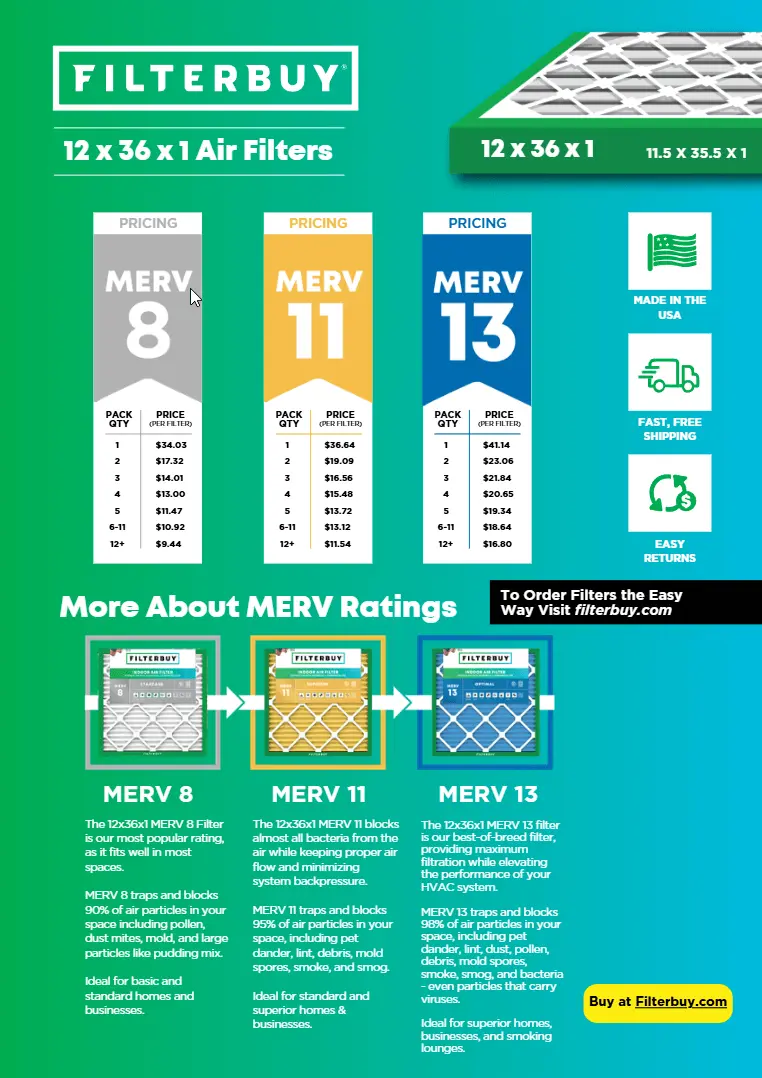
A: It’s the filter’s nominal size (12" × 36" × 1").
Actual size is usually slightly smaller.
This helps the filter slide in smoothly.
Actual size is usually slightly smaller.
This helps the filter slide in smoothly.
Q: How often should I replace it?
A: Every 30–90 days.
Monthly if you have pets, allergies, or high dust.
Monthly if you have pets, allergies, or high dust.
Q: What MERV rating should I choose?
A: Use the highest MERV your system supports.
MERV 11–13 works best for most homes.
MERV 11–13 works best for most homes.
Q: What happens if the filter doesn’t fit tightly?
A: Air bypasses the filter.
Dust enters the system.
Airflow and efficiency drop.
Dust enters the system.
Airflow and efficiency drop.
Q: How do I confirm I need a 12x36x1 filter?
A: Measure the filter slot, not the old filter.
Old filters can warp or be mislabeled.
Learn more about HVAC Care from one of our HVAC solutions branches…
Filterbuy HVAC Solutions - Miami FL - Air Conditioning Service
1300 S Miami Ave Apt 4806 Miami FL 33130
(305) 306-5027
https://maps.app.goo.gl/Ci1vrL596LhvXKU79
Old filters can warp or be mislabeled.